

A Letter to My Lungs, Written on the Stair Landing With a Fountain Pen
A retired penmanship teacher starts writing letters to the part of her that keeps her going, beside a neighbor's tube of five-herb tea from Miami. The label, the precautions and the honest research, line by line.

First, the people: Rosalind Vance is a pen name. Inés, Dana, Theo at the pharmacy and the building on Fourth Street are composites, the way letters columns have always been written.
Everything about the tea itself, its label, its price, its brewing directions, its precautions and its reviews, comes from the seller's own pages, read in October 2026.
 Letter No. 1 · The Ninth Step
On the ninth step of my building, there is a landing with a window that looks over a parking lot and one stubborn royal palm. I know that window better than I want to.
For most of last year, I stopped there every morning on my way up with the mail. Some mornings I stopped there twice: once at the landing and once again three steps from my own door.
I taught penmanship for thirty-eight years, first to fourth graders at a parish school and later to grown-ups in the community center's evening class. My whole job was teaching a hand to slow down.
So I am not a woman who panics at a staircase. I am a woman who counts it, and for a long time the count was eighteen steps, one landing and one stop, and I told myself that was simply what sixty-seven looks like.
This column is about the morning I sat down on that landing with my fountain pen and wrote a letter to my lungs. It's also about a kraft-paper tube of tea from a herb shop in Miami, and about what I can and cannot honestly tell you about it.
I'll say the most important thing first, since I'd want it said to me. A cup of tea is not a plan for your chest, and nothing below should take the place of the person who listens to it with a stethoscope.
Eighteen Steps, One Landing and a Window I Knew Too Well
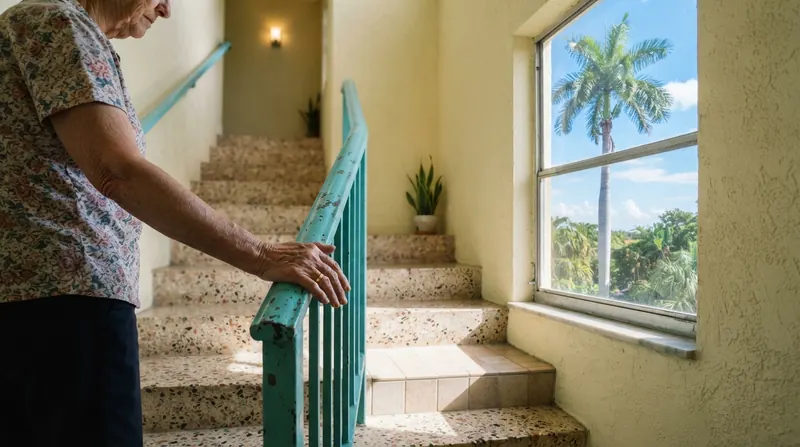
My building was put up in 1956, two stories of pale yellow stucco with a turquoise railing, the kind of Florida apartment house that was built for retired mailmen from Ohio. I have lived on the second floor for twenty-two years.
There's no elevator. There's a staircase of speckled terrazzo, cool under your feet even in August, nine steps up to the landing and nine more to my door.

When Desmond and I moved in, I carried a box of my calligraphy books up those eighteen steps without setting it down. Desmond made a joke about hiring me out to the moving company, and I made a joke about his knees.
Desmond passed in the spring of 2019. The knees were never the problem; it was his heart, and it was quick, and I have made my peace with it as much as anyone does.
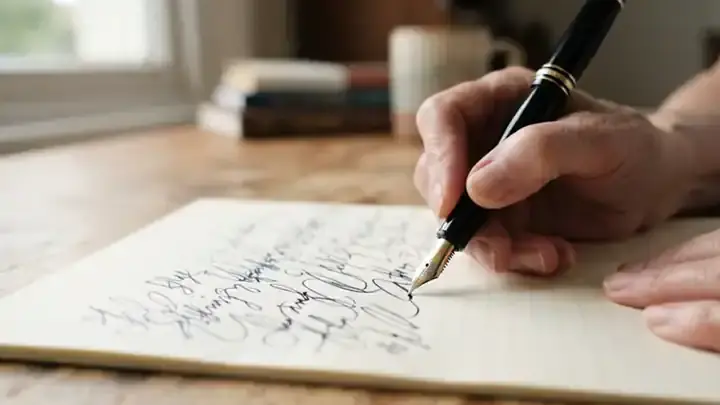
After he died, I started doing something my old calligraphy teacher used to make us do as students. Every Saturday morning, I write one letter by hand to something that has kept me company.
I've written to the house. I've written to my right hand, which still holds a pen better than it holds a jar lid, and to the bay at the end of Fourth Street, and once, rather sternly, to the air conditioner.
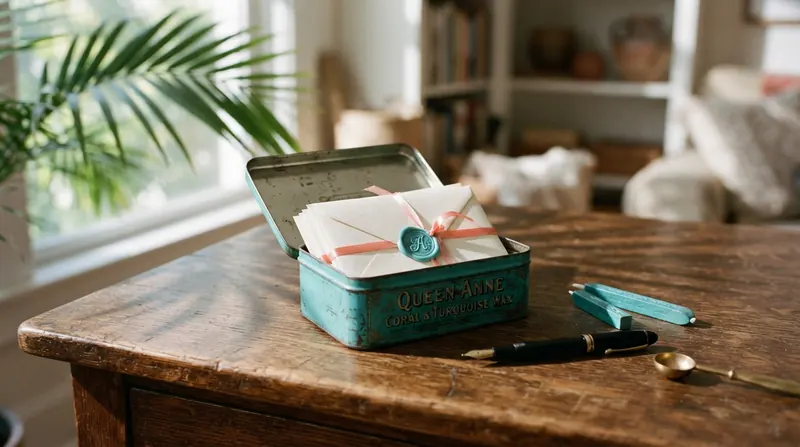
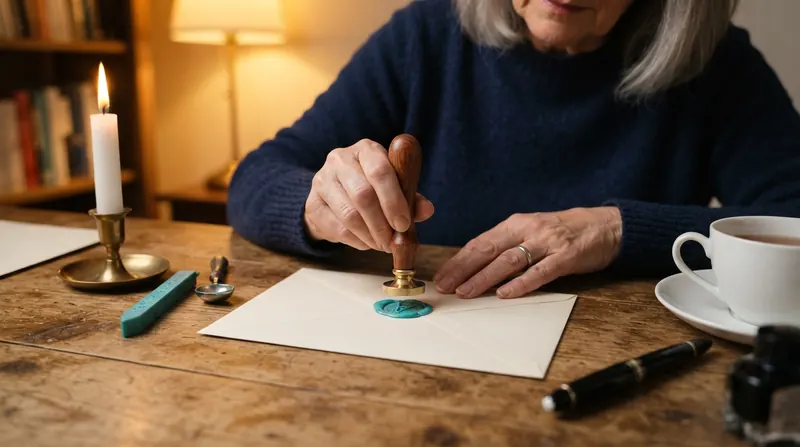
I never mail them, of course. They go into a turquoise tin on my desk, sealed with wax because a calligraphy teacher who doesn't own a wax seal is like a baker without a rolling pin.
The letters keep my hand honest. You cannot write "Dear House, thank you for the shade" in good copperplate and still be cross by the time you get to the signature.
For two years, I never once thought to write to my lungs. You don't write letters to the things you've been ignoring; you write them to the things you've been noticing.
Twenty-Five Years Since the Last Cigarette, and the Cough That Stayed
I should tell you about the cigarettes, because every honest letter has a postscript like this one. I smoked from seventeen to forty-two, mostly in the teachers' lounge, mostly with the music teacher, Mrs.
Lindqvist, who blew perfect rings and taught me how.
In those days, the teachers' lounge at a parish school had an ashtray on every table and a sign on the door about keeping it shut. We graded spelling tests in a blue haze and thought nothing of it.
I quit in 1999, cold, on the first day of Lent. I'd like to tell you it was because I was wise, but it was because my niece Dana, then fourteen, wrote me a letter in her best cursive asking me to stop.
She'd learned that cursive from me. It was a very well-formed letter, with good slant and even spacing, and I couldn't argue with it.
So I've been a non-smoker for twenty-five years. And yet the cough I carried in my forties never entirely packed its bags.
It was a morning cough, mostly. A tight, rattling throat-clearing for the first half hour, like an old car that needs a moment before you put it in gear.
Later in the day it would settle, and I'd forget it. That's the trouble with a cough you've had for a quarter of a century: it stops sounding like a message and starts sounding like furniture.
The morning tightness was newer. Three or four years ago, I began to notice that my chest felt snug when I first got up, as though somebody had laced it a notch too firmly while I slept.
I told no one. I slept propped up on two cushions.
I started opening the windows in the morning, which in Florida in July is its own kind of foolishness.
The Afternoon the Stethoscope Stayed Too Long
In July, I went in for my annual visit. The practitioner who sees me at the clinic, Ms.
Adeyemi, has a kind face and a habit of saying "mm-hm" in three different tones.
She did all the usual things. Then she put the stethoscope on my back and said, "Big breath in for me," and I breathed, and she moved it, and said it again.
She moved it four times. Top left, top right, lower left, lower right, the way you'd check the four corners of a page before you frame it.
On the fourth one, she said "mm-hm" in the tone I liked least. Then she asked about the stairs.
I hadn't mentioned the stairs. I don't know how they always know to ask about the stairs, but they do.
I told her the truth: eighteen steps, one landing, one stop, sometimes two. She wrote it down without looking up, which is the most frightening way anybody has ever written anything down in front of me.
I won't pretend this column is a clinic visit. What she told me was hers to tell and mine to hear, and I'll only say this much: she didn't hand me a frightening word, and she didn't hand me a reason to stop paying attention either.
She gave me three instructions. Walk every day, even ten minutes.
Learn the slow breathing she showed me, in through the nose and out through pursed lips, as if I were blowing gently on a spoonful of soup.
And come back in the spring, with notes. "You're a writer," she said, looking at my handbag, where a fountain pen was clipped to the side pocket.
"Write it down."
I sat in the car afterward with the engine running for the air conditioning and my hands in my lap. Thirty-eight years of telling children to slow their hands down, and I couldn't slow down my own thinking.
What I kept coming back to was a small, silly thought. Of all the things I've written letters to, I had never once written to the two that have been doing the most work.
Dear Lungs, Written Sitting Down on the Ninth Step
The next Saturday, I came up the stairs with the mail and stopped at the landing, as usual. Then, instead of standing there pretending to read a seed catalog, I sat down.
I had my fountain pen and the little leather pad I keep for grocery lists. I wrote the date across the top, July 19, in my best hand, because if you're going to write a letter sitting on a staircase you might as well do it properly.
It was not elegant. My copperplate on a grocery pad on a terrazzo step is not my best work, and the "y" in "yours" ran into the margin.
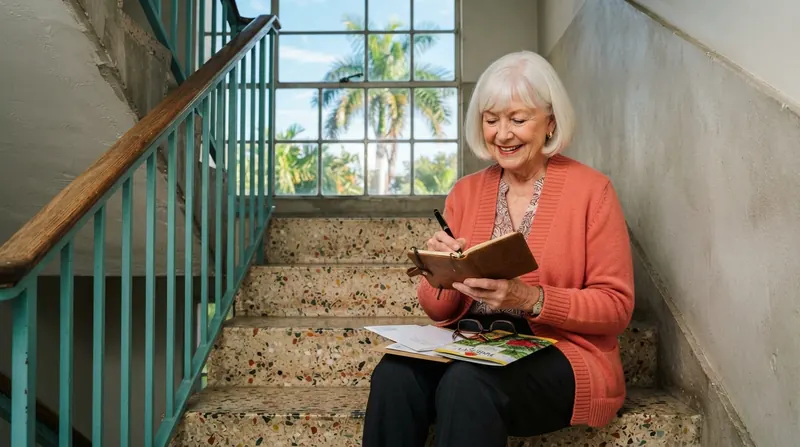
But I read it back sitting there, and I laughed, and the laugh turned into the morning cough, and I let it. Then I got up and climbed the other nine steps and put the letter in the turquoise tin.
That was the beginning of the Saturday letters to my lungs. This column, and this website, are where those letters ended up when my niece told me they were too good to keep in a tin.
I started walking that week, too. Ten minutes along the seawall at the end of Fourth Street, just after sunrise, before the heat comes off the water and makes the whole idea ridiculous.
I practiced the soup-spoon breathing at the stoplight, at the mailbox, and on the landing. And I started a column in the back of my grocery pad: the date, the stops on the stairs, and one word for the morning chest.
The back of the grocery pad, July
- Week 1Walked four mornings of seven, ten minutes each. Stairs: one stop at the landing every day. Chest word: "laced."
- Week 2Walked five mornings. One morning with two stops. Wrote "laced" four times and "snug" twice. The cough the same as ever.
- Week 3Walked six mornings, up to fifteen minutes on two. Stairs unchanged. Chest word: "snug." Started the soup-spoon breathing at every red light.
Nothing much happened in those first three weeks, and I want to be clear about that. The walking was doing what walking does, which is mostly to remind you that you haven't been doing it.
I kept writing the Saturday letters. I kept the column honest, the way I used to grade: a "laced" morning was a laced morning, and I didn't round it up to "snug" to make myself feel better.
Inés, a Kraft-Paper Tube and the Word Her Grandmother Used
Inés Carvajal lives across the hall from me in 2B. She is seventy-two, born in Camagüey, a retired seamstress who still alters every pair of trousers in the building for the price of a cafecito and a little conversation.
She heard me coughing on the landing. Of course she did; the walls in a 1956 building are about as thick as a good sheet of stationery.
One Thursday evening in early August, she knocked on my door with a tube in her hand. It was the size of a tall can of oats, wrapped in plain kraft paper, with a small white label and a pencil sketch of berries and leaves climbing up the side.
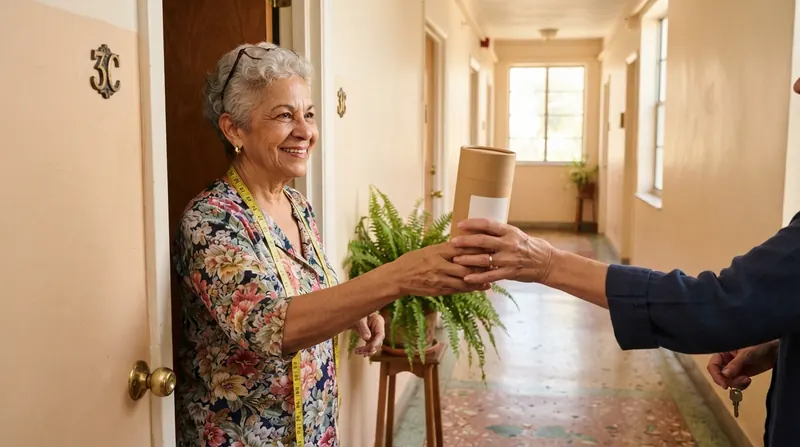
"Gordolobo," she said, tapping the label, before she'd even said hello. "My grandmother boiled the yellow flowers in a little pot every winter.
This one has four more friends with it."
I asked her where on earth she'd found it. Her son lives in Kendall, it turned out, a few minutes from a herb shop on Southwest 147th Avenue, and he'd brought her two tubes on his last visit because she'd been talking about her grandmother's pot.
She had bought one for herself and one, she said, for "the lady with the pen who coughs on the stairs." I told her that was a terrible way to be known in a building, and she told me it was better than being known as the lady who complains about the parking.
I read that card three times.
"I am not your clinic. I am your neighbor."
It's the most honest sentence anyone has ever attached to a gift of tea.
And then, being me, I put the tube on the kitchen counter and decided not to open it until I'd read every word the seller had printed about it. A penmanship teacher reads the instructions before she dips the nib.
Did you open it yet or are you reading it like a contract?
8:12Reading it like a contract. There's a whole paragraph of precautions.
8:15Good, read it out loud to me tomorrow. My eyes are for needles, not small print.
8:16Balcony at seven. Bring the good cups, not the ones with the chips.
8:17That's how the balcony started. Two chairs, two cups and a saucer on top of each, and Inés's transistor radio playing a Spanish-language station very quietly in case either of us ran out of things to say.
We never ran out of things to say. But first, I had my reading to do.
Five Plants in Equal Measure, Read Like a Letter of Introduction
The tube is from a company called Alkaline Herb Shop, in Miami. The product is simply called Lung Tea, and the seller's page says it used to be sold as Happy Lung Tea.
The label on the front says "Healthy Breathing Blend" and "Loose Leaf Tea," and on the side it gives the weight: four ounces. The seller's page says one tube holds about 56 servings.
I like a label that does arithmetic out loud. This one tells you exactly how much of each plant is in a serving, which most blends I've seen in the store simply don't.
Here is the ingredient line, in the seller's order, each one per two-teaspoon serving. Black cherry bark, 400 milligrams.
Palo guaco, the whole plant, 400 milligrams.
Dandelion root, 400 milligrams. Elderberry fruit, 400 milligrams.
Mullein flower, 400 milligrams.
Five plants, the same amount of each, two thousand milligrams in all. In thirty-eight years of grading, I never once saw a child divide a page into five equal columns without being told to, so I gave the label a gold star on the spot.
The seller's description adds a few more facts. The herbs are "organic or wildcrafted," from the USA, Bulgaria, Honduras and Poland, and the page says "Nothing is added: no flavoring, no caffeine, no filler."
It also says every batch is third-party tested "for identity, microbials and heavy metals." I can't check a lab report from my kitchen, but I appreciate a company that tells you what it tests for instead of just saying "tested."
Then I came to the paragraph I'd been warned about by my own common sense: the precautions. The seller prints them under a heading in capital letters, and I'm going to give them to you nearly word for word.
I read that box twice, the second time out loud, which is what I used to make my students do with anything that had a "do not" in it. A seller that prints its own "do nots" in capital letters is a seller that expects to be read.
I don't take a blood thinner, but my friend from church, Bernadette, does. If you do too, the seller is telling you plainly that this tube is not for you, and I'd take them at their word.
The "short term only" line about the black cherry bark stayed with me. It's the reason I decided, before I ever opened the lid, that one tube would be one stretch of time, with a beginning and an end, and that I'd talk to Ms.
Adeyemi before I bought a second.
Theo, may I bring you the back of a tea tube? It has a line about warfarin.
10:02Always. Bring the tube and your list of everything you take, vitamins too.
10:09The list is in my handbag. It's in cursive, I'm afraid.
10:11Your cursive is the easiest thing I read all week. Come after lunch.
10:12Theo read the label at the counter, all the way down, his reading glasses on the end of his nose. He checked my list against it, line by line, and said nothing on it argued with anything in the tube.
Then he said something I've repeated to three people since.
"Read the label like it's talking to you personally. Usually it is."

What the Research Says, and Where It Goes Quiet
After the pharmacy, I went to the library, because that's where a retired teacher goes when she wants to know whether something is true. I asked the reference librarian for help, and she was delighted to be asked something other than how to print a boarding pass.
I want to be very honest about what we found, and about what we didn't.
There is no study of this tea. Nobody has put this tube in front of a group of people and measured what happened.
That's normal for a loose-leaf blend from a small shop. It also means anything you read about it, including this column, is about the plants, not the tube.
Mullein first, since it's Inés's grandmother's plant. A 2021 review in the journal Biology went through the old Spanish folk uses of mullein and looked for scientific explanations. [1]
Mullein has long been used for respiratory ailments such as cough, hoarseness and colds.
Its leaves and flowers are reported to have expectorant and demulcent properties, which could be explained by the presence of mucilages.
— Moreno and colleagues, Biology (2021), Review of mullein in Spanish folk tradition[1]
"Demulcent" was a new word for me, and the librarian looked it up with me. It means something soothing that coats; the mucilage in mullein flowers is a soft, slippery substance, a little like what makes okra okra.
The review is careful, and so I'll be careful too. Most of what it describes is long traditional use and laboratory work, not trials in people.
It's a history lesson with a microscope, not a promise.
Inés was very satisfied with this part. "So my grandmother was a scientist," she said, and I told her that was exactly how I'd put it in the column.
Elderberry next. The National Center for Complementary and Integrative Health, part of the federal health institutes, keeps a plain-English page on it, and it is refreshingly blunt. [2]
The evidence for elderberry's effects is limited, and there is insufficient evidence to know whether it can help with symptoms.
It is not known whether elderberry is safe to use during pregnancy or while breastfeeding.
— National Center for Complementary and Integrative Health, Plain-language page on elderberry[2]
I respect a government office that prints "insufficient evidence" about the most famous berry in the aisle. When an office is that honest about one plant, I'm inclined to believe it about the others.
Dandelion root, black cherry bark and palo guaco: the librarian and I found nothing I'd put my name to for this purpose. They're plants with long histories in kitchens and folk traditions, and on this page they are ingredients on a label and nothing more.
That's not a criticism of the tube, by the way. The seller's page doesn't quote a study either, which I took as good manners.
So that's the research file. Two plants with something written about them, three with a history and no file I'd quote, and no study of the blend.
If you came here looking for a percentage, I don't have one for you, and anyone who gives you one about a loose-leaf tea should be asked where they got it.
Two Teaspoons, a Rolling Boil, a Saucer on Top and Five Minutes
So I opened the lid. Here's the ritual, written out the way I'd write a lesson plan for a substitute, because the ritual turned out to be most of the pleasure.
Step one: the kettle. The seller's directions say water "brought to a rolling boil," so I wait for the real whistle, not the polite rumble just before it.
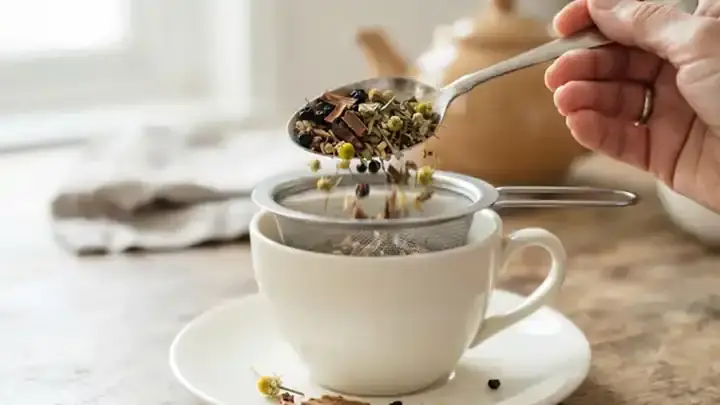
Step two: the spoon. Two teaspoons of loose leaf into an infuser.
The seller says one teaspoon makes a lighter cup, and I started with one in the first week while I got used to it.
Step three: the pour. Eight fluid ounces, "poured over straight away," the directions say, which I took to mean: don't let the kettle sit while you answer the phone.
Step four: the cover. This is the step I'd never have thought of.
The seller says to cover the cup and explains why: "it keeps the aromatic oils in the cup instead of in the steam."
I use a saucer from my mother's wedding china, the one with the little blue border. It sits on top of the cup like a lid on a sugar bowl, and the steam beads up underneath it.
Step five: the wait. Five minutes, according to the directions.
I set the little brass hourglass Desmond gave me for my desk, which runs four minutes and forty seconds, and then I count the last twenty under my breath.
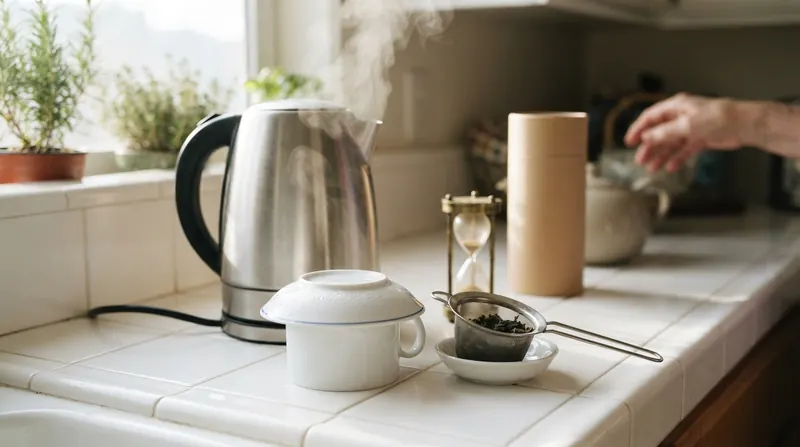
That's all of it. No measuring cup, no blender, nothing to swallow with a glass of water; a kettle, a spoon, a saucer and five minutes.
The taste, since everyone asks. It's earthy and gently bitter at first, from the dandelion root, with a soft almond note from the cherry bark that I liked very much.
The elderberry brings a faint dark-fruit color and a whisper of tartness. The mullein flowers, I think, are what give it a soft, round feel in the mouth, though I may be romanticizing Inés's grandmother.
It does not taste like candy. It tastes like a walk through a garden after rain, if the garden had a cherry tree in it and someone had forgotten to weed the dandelions.
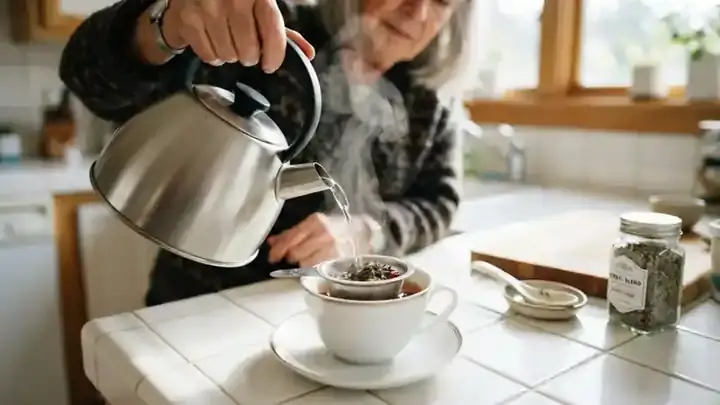
Fifty-six servings at one cup a day is eight weeks. Eight weeks of suppers, on the balcony with Inés, with a saucer on the cup: that's what one tube is, in the units I actually live in.
At $29.99, that's about fifty-four cents a cup. It is considerably less than the iced coffee I was buying on Tuesdays, and considerably more pleasant than the cough drops I'd been eating like popcorn.
Dear Mullein, Dear Elderberry, Dear Dandelion, Dear Cherry, Dear Guaco
On the first Saturday after I opened the tube, I did something my old calligraphy teacher would have approved of. I wrote five short letters, one to each plant on the label.
It was partly a joke on myself and partly a way of learning the ingredients, the same way I used to have children write a sentence to each new letter of the alphabet. If you've written to something, you remember it.
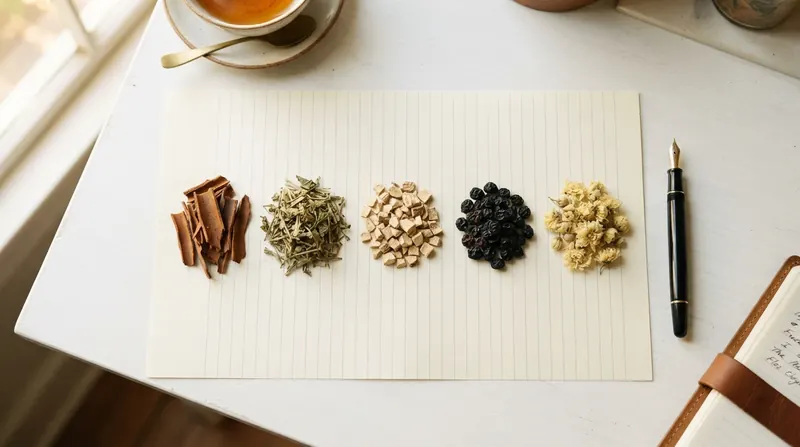
The seller makes a point of the flower-versus-leaf business. Their page says most mullein products on the market are the leaf, "which is cheaper and easier to harvest," and that this tea uses "the soft yellow flowers, picked and dried whole."


I'll add one note from that same federal page, since it belongs here. It says it isn't known whether elderberry is safe during pregnancy or breastfeeding, which fits neatly beside the seller's own "not for use during pregnancy or nursing." [2]
Writing those five letters taught me more about what was in my cup than any amount of reading. I knew each plant by name, by taste and by its "do not," which is how I'd want to know anything I drink every evening.
A Cup of Tea, Not a Plan, and Not Anything Your Clinic Gave You
Before I go any further, I want to write a short list of what this tube is not. I wrote it on an index card and tucked it into the lid, under Inés's card.
It isn't an inhaler, and it isn't a replacement for anything your clinician has given you. If you have something from your clinic for your chest, keep using it exactly as you've been told, and don't let a tea talk you out of it.
It isn't a study. No one has tested this blend, and I've told you everything the research file holds on its plants.
It isn't a cleanse, and it doesn't "clear" anything. I've seen boxes in the store that promise to scrub your chest like a kitchen floor, and nothing honest can make that promise about a cup of tea.
And it isn't for everyone. Not if you take a blood thinner, not if you're expecting or nursing, not for anyone under eighteen, and not without a word with your clinician if you have a health condition that's being watched.
What it is, then, is a warm cup after supper. It's a ritual that put the end of my day on a balcony instead of in front of the evening news, and that, in my experience, is worth more than it sounds.
What the Seller's Review Page Shows, Word for Word
I'm one woman with one grocery pad. So I went looking for what other people had said about the same tube, and I'm going to show you exactly what the seller's review page displays, spelling and all.
When I read it in October, the page showed 106 reviews averaging 4.8 of 5 stars. I read a good number of them, and I chose three to print in full, for a reason I'll explain in a moment.
The photos beside each review are illustrative portraits, not the reviewers themselves; the seller's page publishes first names, not faces. The words are theirs, copied exactly, and the seller's review widget marks each of the three as a confirmed purchase.

Amazing
One word. I've graded a great many one-word answers in my life, and usually I wrote "Elaborate, please" in the margin.
In a review, though, I find one word rather convincing; nobody bothers to type "Amazing" about a tea they didn't care for.

Bery pleasent taste
Yes, it says "Bery pleasent." I've left it exactly as written, because a review with a typo in it was written by a real person between other things, not by a marketing department.
And I agree with avery, for what it's worth. The taste is pleasant, if you like earthy and a little bitter; if you like sweet and flowery, you might give it fewer stars.

Bought this for a relative, they are happy with the product
Angelica's is my favorite, and not only because it's the one most like Inés. "Bought this for a relative" is how a great many of these tubes travel: from one person who worries to another person who coughs.
Now, the reason I chose these three. Some reviews on that page make claims about what the tea did for someone's chest, and a few mention things they stopped using.
I'm not going to print those. Not because I think the reviewers are lying, but because one person's experience is not evidence, and a column that prints the most hopeful sentence on a review page is doing the advertising's job for it.
The three above say what a review can honestly say. It was amazing, it tasted good, and the person it was bought for was happy with it.
That's what I can vouch for too, and nothing more.

Eight Weeks of Suppers, Good Mornings and Bad Ones
I started the tube on Sunday, August 10, the week after Inés knocked on my door. I kept the same columns on the back of my grocery pad, and I added one more: "balcony," with a check mark if Inés and I had our cup there.
I'll say it again, because it's the part people skip. I was walking every morning and doing the soup-spoon breathing every day, as Ms.
Adeyemi told me to, the whole time. The cup rode along; it never drove.
The back of the grocery pad, August to October
- Week 1One teaspoon, a lighter cup, six evenings of seven. Balcony five times. Stairs: one stop every morning. Chest word: "snug." Inés says my saucer technique needs work.
- Week 2Two teaspoons now. Nothing new. Same stop, same morning cough, same "snug." Wrote "nothing" three days running and nearly gave the tube back across the hall.
- Week 3First margin note: "didn't think about the landing until I was past it." Walked twenty minutes twice. Chest word on Thursday: "easy." Friday back to "snug."
- Week 4A rainy week. Skipped two walks, kept the cup. Two stops on Wednesday, the worst day of the month. Wrote it down plainly.
- Week 5Saturday: carried the mail and a bag of oranges up all eighteen steps without stopping. Sat on the landing anyway, on purpose, and wrote Letter No. 15.
- Week 6Four mornings without a stop at the landing, three with. The morning cough shorter, I think, though a cough is hard to time. Walked twenty minutes most days.
- Week 8The tube is down to the last spoonfuls. Balcony 44 times of 56. Appointment with Ms. Adeyemi on the calendar for November, with the grocery pad in my handbag.
I want to slow down on week two, because it's the week most people quit. Three days in a row of "nothing," in the handwriting of a woman who already suspected she'd been talked into a cup of lawn clippings by a seamstress.
What kept me going was the same thing that kept me at the parish school through every September. You don't judge a child's handwriting by the second week of the school year.
Week three is the margin note I'd circle in red if I were grading. "Didn't think about the landing until I was past it."
For a year, that landing had been where I stopped. That week, for one morning, it was simply a place I walked through on my way somewhere else.

Week four was bad, and I'm printing it. Four days of rain, two missed walks and a Wednesday with two stops on the stairs, the worst day of the whole two months.
A column that leaves out week four is an advertisement. I'd rather you know that the line went up and down, because if you try anything at all, yours will too.
And week five. I came up the stairs with the mail in one hand and a bag of oranges from the farm stand in the other, and I didn't stop at the landing, and I didn't notice I hadn't until I was at my own door with the key.
I went back down to the landing and sat on the ninth step on purpose, the way you'd go back to look at something you'd dropped. Then I wrote Letter No. 15.
I want to be exact about that letter, because I wrote it to be exact. I don't know which of those things made the difference, and neither does anyone else.
I'd been walking for nine weeks by then. I'd been breathing through pursed lips at every red light in Pinellas County, and I'd been on the balcony most evenings instead of in my recliner.
If you asked me to bet, I'd put my money on the seawall. But I'd put the cup in the same envelope, because it was the thing that got me out of the recliner and onto the balcony every evening, and the balcony is where I decided to keep walking.
The grocery pad is a tally, not a trial. One woman, one staircase, one pencil, and a great many other things going on at the same time.
I print it because Ms. Adeyemi asked me to keep notes, and because a page of notes is more honest than a sentence of hope.
You'll notice weeks one and two are zero; I didn't round them up.
Where the Cup Actually Fits in a Day
People ask me what a day looks like now, as though there's a schedule worth copying. There isn't, really, but here it is, since a day is easier to borrow than a principle.
Six-thirty: the morning cough, the windows open while it's still cool, a glass of water. I write one line in the grocery pad, the chest word, before I've had a chance to talk myself out of it.
Seven: the seawall, fifteen or twenty minutes, at whatever pace the pelicans set. Soup-spoon breathing at the two crosswalks on Fourth Street.
Seven-thirty: the stairs, with the mail. I count them out loud, under my breath, which I've done since I was a girl, and I write the number of stops in the pad.
The middle of the day belongs to the rest of my life: the library on Wednesdays, the church altar guild on Thursdays, and an adult penmanship student on Fridays, a retired engineer who writes like a seismograph.
Tía Ros, did the landing win or did you win this morning?
6:48I won, oranges and all. Wrote a letter about it.
6:55Put that one on the website. And tell Inés we're coming Saturday.
6:56She's already planning flan. Bring the boys and the good pens.
6:57Seven in the evening: the kettle. Two teaspoons, a rolling boil, a saucer on top, Desmond's hourglass and twenty counted seconds.
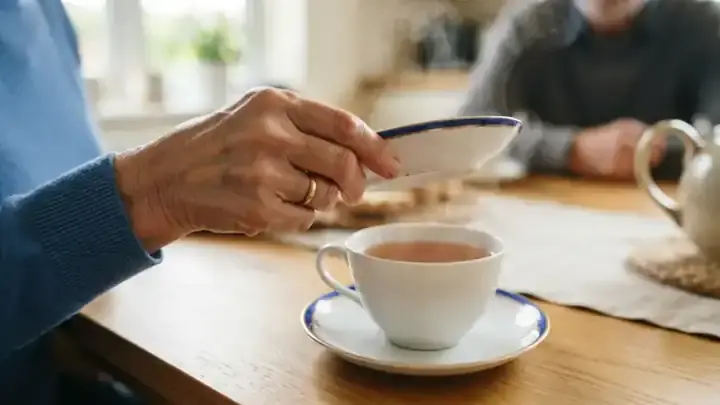
Then the balcony, with Inés and her radio, two cups and two saucers and whatever the sky is doing over the palms. That's the cup's whole job in my day.
It holds the evening open long enough for two women to talk instead of watching the news alone.
On the nights Inés goes to her son's, I take the cup to my desk instead and write. Many of the letters on this site were written with a covered cup at my elbow and a wax stick warming in the candle.
What Readers Wrote When the First Letters Went Up
When Dana first put a few of the Saturday letters online in September, I expected my sister and two former students to read them. Instead, people wrote back, which is the best thing that can happen to a letter.
The comments below are illustrative, retold from reader notes with names shortened. Replies sit under the comment they answer, because they ask what you're probably asking.
Loretta's comment is the one I've thought about most. "I didn't tell anyone, not even my daughter."
I did the same thing with the stairs for a year. We keep it to ourselves because saying it out loud feels like admitting something, and at our age, admitting something feels like signing it.
And Phyllis's comment is the reason I'd print the precautions box again tomorrow, in larger type. If one reader on a blood thinner put the tube back because of it, the box did more good than anything else in this column.
Inés and I, Recorded for the Library's Oral History Booth
In October, the library asked whether Inés and I would sit for its oral-history project, "Neighbors on Fourth Street." Inés said yes before I could say anything at all.
Here's the transcript, trimmed only for the part where Inés stopped to tell the volunteer that his trouser hems were a disgrace.
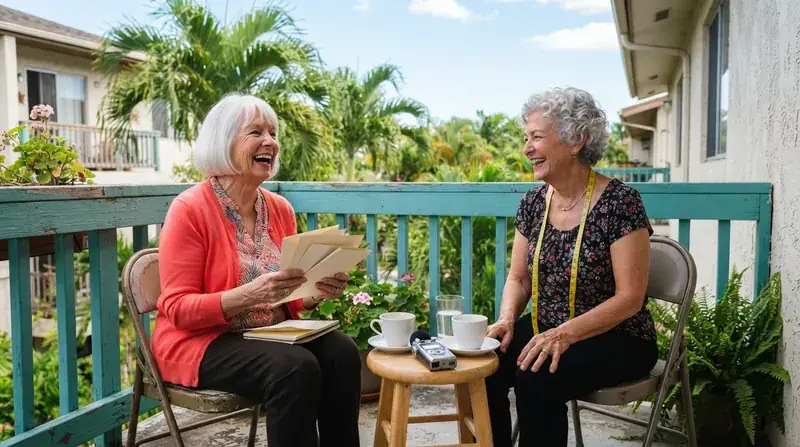
Neighbors on Fourth Street · Oral History, Session 6
Two Neighbors, Two Saucers and Eighteen Terrazzo Steps
Rosalind
host
Inés, the library wants to know why a seamstress from Camagüey knocked on a penmanship teacher's door with a tube of tea and no notice.
 Inés
guest
Because I heard you on the landing every morning for a year, and you never once knocked on my door about it. Somebody had to knock first, and you were too proud.
Rosalind
host
And why tea? You could have brought soup, and you make very good soup.
Inés
guest
Soup is for when you're already in bed, and tea is for before. My grandmother boiled gordolobo flowers every winter in a little pot, and when my son found a tube with gordolobo and four more plants, all the same amount, I thought: this one is for the lady with the pen.
Rosalind
host
I read every word on it before I opened it, you know: the label, the precautions, and then the library. Mullein has a long history, elderberry is "insufficient evidence," and nobody has ever studied the tube itself.
Inés
guest
I never told you it was a study; I told you to drink it on the balcony with me instead of watching the news alone. You were the one who went looking for a footnote, because you are a teacher and you can't help it.
Rosalind
host
Fair enough. So tell the library what you'd tell someone who's sitting on their own landing right now, holding the rail.
Inés
guest
Tell your clinic about the stairs first, before anything, then walk, even a little, and do the breathing they show you. And if you want something warm in your hands after supper, read the box with the "do nots" out loud, and if none of them are you, put the kettle on and knock on a neighbor's door.
Inés listened to the recording afterward and asked for one correction. She wanted it on the record that her soup is not "very good"; it is the best on Fourth Street, and the volunteer agreed after he tasted it.
I've gone back to her last line more than any other. "Read the box with the 'do nots' out loud, and if none of them are you, put the kettle on."
4 oz loose-leaf tube · about 56 cups · read the precautions box first
The Guarantee, Read Like a Letter From a Lawyer
Now the part most columns skip, and the part I'd have read first: what happens if you don't like it.
The seller calls it a satisfaction guarantee, and it has real terms. I read it twice, the way I'd read a letter from a lawyer, and here it is in my own words.
The 30-day satisfaction guarantee, in plain words
If you're not satisfied, you email the seller within 30 days of receiving the tube, mail back the unused portion, and they issue a full refund once it arrives at their facility.
You pay the postage to send it back; the seller says plainly that shipping labels are not provided. International returns carry a 10 percent restocking fee.
Alkaline Herb Shop · 2423 SW 147 Ave #102, Miami, FL 33185 · (786) 536-2903 · [email protected]
The words "unused portions" matter. As I read it, if you've used half the tube and mail back the rest, the refund is for what comes back; if you're not sure, write to them before you send anything.
The postage is yours. A four-ounce tube doesn't cost much to mail, but I'd rather you knew now than discovered it at the post office counter.
Thirty days from receipt, not from the first cup. If the tube sits in your cupboard for five weeks before you open it, the window has closed, so open it, or decide about it, within the month.
What I like about it is that there are no percentages for opened tubes and no disposal fees. Email them, send back what you didn't use, and they refund it once it arrives.
The company is Alkaline Herb Shop, and it prints a street address in Miami, on Southwest 147th Avenue, and a phone number with a 786 area code. Inés's son drove past it on his way to work, which is more verification than I usually get.
A street address, a phone number, a precautions box and a guarantee with real terms in it. My checklist for anything I put in my cupboard is four lines long, and this tube ticked all four before I got to the taste.
Short Answers to the Letters I Get Most
After the first letters went up, I got more mail than I've had since my retirement party. I've answered the questions that came up most, the same way I'd answer them across the hallway.
Short answers, written across the hallway
How do you make it?
Two teaspoons in an infuser, eight ounces of water brought to a rolling boil and poured over straight away, covered, left five minutes, per the seller. One teaspoon makes a lighter cup.
Why the saucer on top?
The seller's own directions say to cover the cup because "it keeps the aromatic oils in the cup instead of in the steam." I use my mother's china, but any small plate works.
What does it taste like?
Earthy and gently bitter from the dandelion root, a soft almond note from the cherry bark, a faint dark-fruit color from the elderberry. If you like sweet, flowery teas, you may not care for it.
Does it have caffeine?
The seller says no: "None of the five plants contains caffeine, so it suits the evening as well as the morning."
How long does a tube last?
The seller says about 56 two-teaspoon servings in a 4 oz tube. At one cup a day, that's eight weeks; at a one-teaspoon lighter cup, longer.
Who should not drink it?
The seller says not if you take an anticoagulant (it contains palo guaco, which has coumarin), not during pregnancy or nursing, and that black cherry bark is "traditionally taken short term only." Anyone under 18 or with a known health condition should ask their own clinician first.
Will it help my chest?
Nobody honest can promise that about a tea, and no one has studied this blend. My own mornings got easier over two months of walking, slow breathing and an evening cup, and I can't tell you which one did what.
Is it mullein leaf or mullein flower?
Flower, according to the seller, "picked and dried whole." They say most mullein products use the leaf.
Is it tested?
The seller says every batch is third-party tested "for identity, microbials and heavy metals," and that the herbs are organic or wildcrafted from the USA, Bulgaria, Honduras and Poland.
Who sells it, and how do I reach them?
Alkaline Herb Shop, 2423 SW 147 Ave #102, Miami, FL 33185. Phone (786) 536-2903; email [email protected].
Who This Tube Is For, and Who Should Leave It on the Shelf
I wouldn't send a letter without a closing, so here's mine. Fair notice: half of it tells some of you not to buy.
It probably makes sense to look at it if:
- You'd like a warm evening ritual with your hands busy for five minutes, not something to swallow with water
- You like earthy, slightly bitter flavors: dandelion, bark, a garden after rain
- You want to know exactly how much of each plant is in your cup, and five equal columns appeal to you
- You've already told your clinic about the stairs and you're walking and doing the breathing they showed you
- None of the lines in the precautions box describes you
It probably isn't for you if:
- You take warfarin or any other blood thinner; the seller says plainly not to use it
- You're expecting or nursing, or you're under eighteen
- You want a promise about your chest; nobody honest can give you one about a tea
- You want something to take every day for years; the cherry bark line says "short term"
- You haven't told your clinic about the stairs yet; do that first, this week
That last line matters most. This is a cup of tea, not a plan; the plan is whatever you and your clinician write down together.
What a Cup Costs, Against What I Was Already Spending
Now the money, because Dana made me promise I'd put it in plain numbers. The tube is $29.99 for about fifty-six servings.
That's about fifty-four cents a two-teaspoon cup, or about twenty-seven cents if you like the lighter one-teaspoon cup. For comparison, the Tuesday iced coffee I used to buy after the library was $4.85.
I'm not saying the cough drops were wasted because the cup is cheaper. I'm saying the cough drops were aimed at the cough, and the fifty-four cents is aimed at the evening.
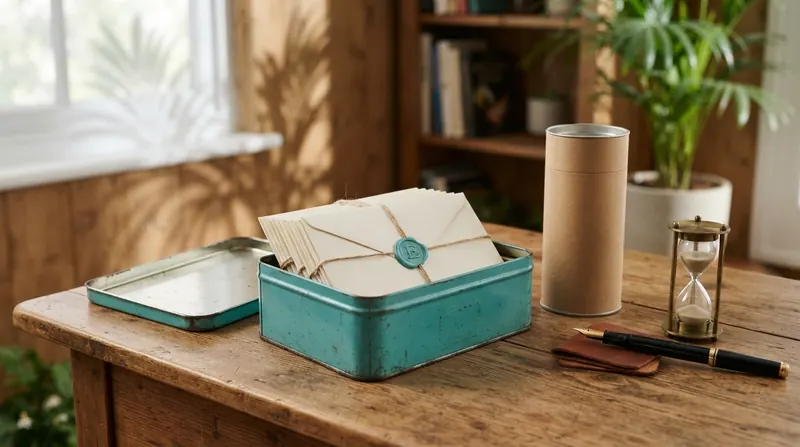
Where the Tube Stands, Line by Line
Here's the summary I'd seal into the envelope. If you only remember one part of this column, make it this one.
✓ Five plants, 400 mg each, printed plainly on the label: black cherry bark, palo guaco, dandelion root, elderberry and mullein flower, with no flavoring, no caffeine and no filler, per the seller.
✓ A precautions box in capital letters, covering blood thinners, pregnancy and nursing, and the short-term tradition of the cherry bark.
✓ About 54 cents a cup, with a Miami street address, a phone number and a 30-day satisfaction guarantee on unused portions.
✓ A ritual that fits an evening: a kettle, two teaspoons, a saucer on top and five minutes, nothing to swallow and nothing to measure past a spoon.
✗ No study on this tube, and thin research on its plants. Mullein has a long traditional history and a soft, coating nature; elderberry is "insufficient evidence"; the other three are label ingredients. [1] [2]
✗ Not for everyone. Not with a blood thinner, not while expecting or nursing, and not as an every-day-for-years habit, by the seller's own words.
✗ Returns cost postage. The guarantee refunds the unused portion; mailing it back is on you.
✗ Loose leaf only. You'll need an infuser, and a saucer, and five minutes you can't rush.
If You're Standing on Your Own Landing, Holding the Rail
I can't tell you what to do. I can tell you what I'd do if I were reading this column instead of writing it, back in July, sitting on a terrazzo step with a grocery pad.
First, before you buy anything at all: tell your clinic about the stairs. Say the number out loud, steps and stops, and let them write it down.
Second: walk, even ten minutes, even to the end of the block and back. That's the column my clinic cared about most, and it costs nothing at all.
Third: learn whatever breathing they show you and do it at red lights. Mine is the soup spoon: in through the nose, out slowly through pursed lips.
And fourth, if you'd like something warm in your hands after supper, and none of the "do nots" are you: read the label I've been describing for ten thousand words. Five plants, two teaspoons, a saucer, five minutes, about 54 cents a cup.
I won't pretend a link at the bottom of a letters column is anything but a door to the seller's shop. Dear Lungs Journal doesn't keep inventory; we keep letters.
But if you walk through that door, you'll know exactly what's on the other side: five plants in equal columns, an earthy cup, a precautions box, a guarantee with real terms and a phone number in Miami.
Loose leaf · five plants, 400 mg each · read the precautions before ordering
One more thing, and then I'll let you get to your own evening. The grocery pad is still on my kitchen counter, beside the kraft tube and my mother's saucer.
Yesterday's line reads: "Oct 24. Seawall 20 min.
Stairs 0 stops. Balcony with Inés.
Dana and the boys Saturday, flan."
Stairs 0 stops. Three words, in pencil, written by a woman who spent a year pretending to read seed catalogs on a landing.
P.S. Inés's card is taped inside my cupboard door now, next to the hourglass, its ink faded from black to gray, and if you have an Inés in your life, knock on her door tonight; if you are the Inés, knock anyway.
P.P.S. Remember the order on my index card, the clinic, the walking, the breathing and then the cup; the cup is the smallest of the four, and it's the only one that comes in a tube.
The full ingredient guide, with a note on each of the five plants, the seller's precautions and a word on reading the advertising around this tube, is linked at the foot of this page.